

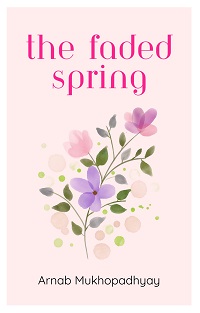
Description
It feels strange, almost unreal, to try and summarize this deeply personal journey. But if I step back and look at the pages I have written, this is what the book is:
It is an honest search for love in a place where I was told my kind of love should not exist. It is the story of Argha and me, two young men navigating the constant, terrifying tension between wanting to be seen and needing to stay safe. Our relationship, clumsy and sacred in its own way, began in the awkward honesty of texts and flourished under the guidance of my formidable best friend, Sayantika.
But the story is not a fairy tale. It is about how the quiet hostility of my home, the anxiety over my own body, and my fear of public shame slowly chipped away at the beautiful thing we built. I kept saying no to adventure and yes to silence. I lost pieces of myself trying to fit into a mold, sacrificing my authentic self for a fragile peace.
The book is the final act of defiance against that fear. It is a testament to the fact that even when the love fails—when the “Spring NEVER came”—the memory of that courage, that laughter, and the acceptance I found in surrogate families endures. I wrote it as a monument, a record of a quiet history that deserved to be heard. It is my way of proving that even my heartbreak had purpose.
About The Author
Welcome. As you embark on this journey into The Faded Spring, I want to offer a moment of reflection before the world of Argha and Sayantika begins.
I am Arnab Mukhopadhyay, and thank you for choosing this book.
To me, literature has never been about escapism or simply passing exams. It has been a vital necessity—a survival guide for an anxious heart. Literature taught me that my greatest wound was also my greatest work of art. It gave me the authority to look at my pain—the shame of my childhood, the fear of public judgment, the paralyzing insecurity that plagued me—and see not a personal failure, but a story with universal echoes. It taught me that my struggle to be seen and accepted was just as complex and important as any tragic flaw found in a play. Without the lessons learned in quiet classrooms, I would never have had the philosophical tools to diagnose my own despair, or the artistic courage to reclaim a personal history that might have otherwise faded into silence. This book is the final, tangible proof that my life, in all its complicated, messy honesty, was worth writing.
Reviews
There are no reviews yet.