

Description
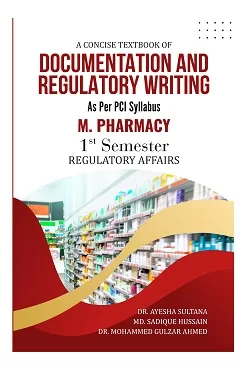
Chapter one discusses the Documentation in the pharmaceutical industry for product safety, quality, regulatory compliance, meeting industry standards, and legal requirements by emphasizing on EPDB, PDP, PDR, Master formula record, BMR, BPR, Batch Reconciliation, Print pack specifications, CoA and DMF. Proper documentation ensures compliance, constant production, quality control, and is used in regulatory audits, inspections, and judicial proceedings as evidence.
Chapter two gives a detailed description on Dossier preparation and submission. The pharmaceutical industry’s dossier preparation and submission guidelines ensure thorough, accurate, and transparent regulatory papers for authorities, ensuring compliance with regulatory standards. This chapter focuses on compilation & contents of dossiers, CTD, eCTD, ACTD, ESG, NeeS and submission in Sugam system of CDSCO.
Chapter three illustrates about Audits, types of audits, auditing strategies, audit analysis, report, audit follow up, timelines, GHTF study group 4 guidance document and ISO 13485 which are essential for ensuring that companies follow regulations, uphold high standards, and provide safe, effective goods by assessing supply chain management, production, quality control, and clinical trials. Chapter four deals with Inspections that are crucial in the pharmaceutical sector to ensure the quality of pharmaceutical goods, ensuring compliance with laws and industry best practices. This chapter highlights the procedures and checklists to be followed for pre-approved inspections, inspections for pharmaceutical manufacturers, drug distribution channels, and CAPA.
Chapter five explains the Product life cycle management, a strategic approach in managing a therapeutic product throughout its entire life cycle, ensuring profitability, competitiveness, and market alignment while considering changing patient demands. The topics included are PAS, SUPAC, CBE-30, lifecycle management, FDA inspection and enforcement, EIR, warning letters, recalls, seizure and injunctions.


 Business Strategies Post Pandemic
Reviews
There are no reviews yet.